
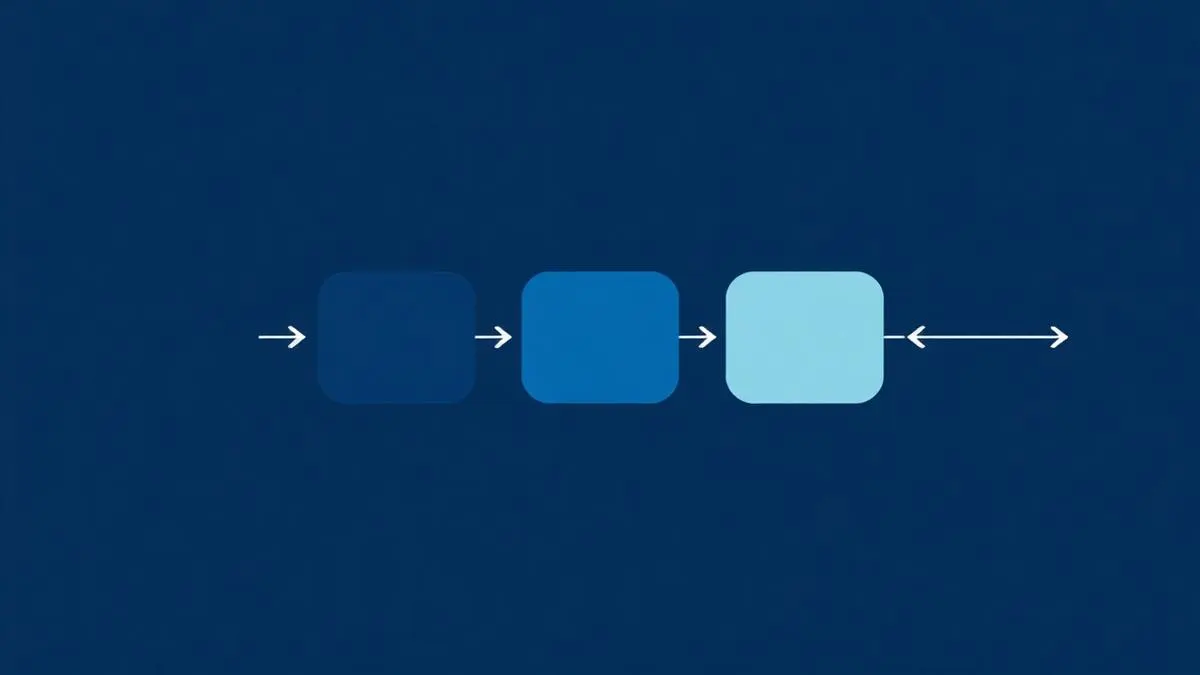
Initiate → Plan → Execute → Close
The Project Lifecycle, End to End
Initiation through closure: what actually happens in each phase and the artifacts that prove it.
On this page
Every project — a bridge, a mobile app, a company reorg — moves through the same five process groups. The vocabulary changes; the sequence does not.
The five process groups
- 1Initiating — establish that the project is worth doing. Output: a signed charter naming the sponsor, objective, and high-level budget.
- 2Planning — decide how the work will be done. Output: scope baseline, schedule, budget, risk register, and communication plan.
- 3Executing — produce the deliverables. The bulk of the budget is consumed here.
- 4Monitoring & Controlling — measure against baselines and steer. Runs in parallel with executing, not after it.
- 5Closing — formal acceptance, contract closure, lessons learned, release of the team.
Phase gates
A gate is a decision point, not a ceremony. At each gate the sponsor answers one question: given what we now know, is continuing still the best use of this money? A gate that can only ever say yes is theatre.
| Phase | Key artifact | Exit criterion |
|---|---|---|
| Initiating | Project charter | Sponsor authorises spend |
| Planning | Baselines | Plan approved and realistic |
| Executing | Deliverables | Acceptance criteria met |
| Closing | Lessons learned | Formal sign-off |
Related PMI standards & templates
External resources on pmi.org — links open in a new tab. Some require PMI membership.
PMBOK-aligned templates for this topic
Editable Word and print-ready PDF downloads — no sign-up required.
- Project charter template →A PMBOK-aligned project charter template with a section-by-section walkthrough, a filled-in example and the sign-off block sponsors actually ask for.
- Project plan pack template →A PMBOK-aligned project plan template pack: the nine-section plan document plus a schedule worksheet with duration, dependency, float and milestone tabs.
- RAID log template →A PMBOK-aligned RAID log template with risks, assumptions, issues and dependencies in one register, a 1-25 scoring key and a filled-in example you can copy.
- Stakeholder register template →A PMBOK-aligned stakeholder register and engagement plan template: power/interest grid, current versus target stance, and the channel and cadence for every group.
- Lessons learned log template →A PMBOK-aligned lessons learned log template with a facilitation walkthrough, a worked example and the review cadence that stops lessons being written from memory at closure.
The PM Delivery Toolkit turns everything in this guide into fill-in templates — $25, one payment.
Get five PM habits that quietly save projects
Baselines, critical path discipline, RAID logs that people read, range estimating and status packs sponsors act on — sent straight to your inbox, free.
One email, no spam, unsubscribe any time.
Discussion
Share how you applied this in practice, ask a question, or add a tip for other readers.
Loading comments…